I thought that I was successfully on autopilot in the wake of George Floyd’s death. Nothing changed on the outside. I still went to my 9 to 5. I still showered and brushed my teeth. My diet didn’t change. I went to bed when I was supposed to. Did I sleep well? No, but the routine continued. Even though my physical body could perform the daily operations needed for my survival, my mind felt unsteady. I found myself replaying images of bloody, Black bodies in my mind even when I wasn’t watching a video. I could hear the cry of Black mothers wailing for their babies. I could visualize the Karens of the world minimizing Black pain or calling the police with crocodile tears. I didn’t want to admit to anyone or to myself that I was feeling hurt. I was also scared. I thought about taking a walk with my friend but Ahmaud’s murder scared us both. I found myself over analyzing how many hoodies my boyfriend owned and if he really needed so many. During the day, I was having intrusive thoughts that someone I loved was shot–simply because they were in the wrong place at the wrong time. In simple terms, I wasn’t well.
“The definition of insanity is doing the same thing over and over again, but expecting different results.”
So I took time to disconnect from the world and journal my feelings. I tried to meditate instead of looking at social media. My friends and I talked about other things as if the world wasn’t on fire. The peace was short-lived though. Fears were replaced with guilt. I was (and still am) donating and signing petitions for the Black people who unjustly lost their lives. I was sharing info when I could. But it didn’t feel like enough. People were fearlessly facing tear gas and rubber bullets with their fists in the air. My peers were creating initiatives from the ground up or leading discussions on a wide scale. I started looking at myself and feeling that as a Black person, I should be doing way more than anyone right now. Black voices are being amplified, right? Was mine loud enough? Was it a voice that needed to be heard?
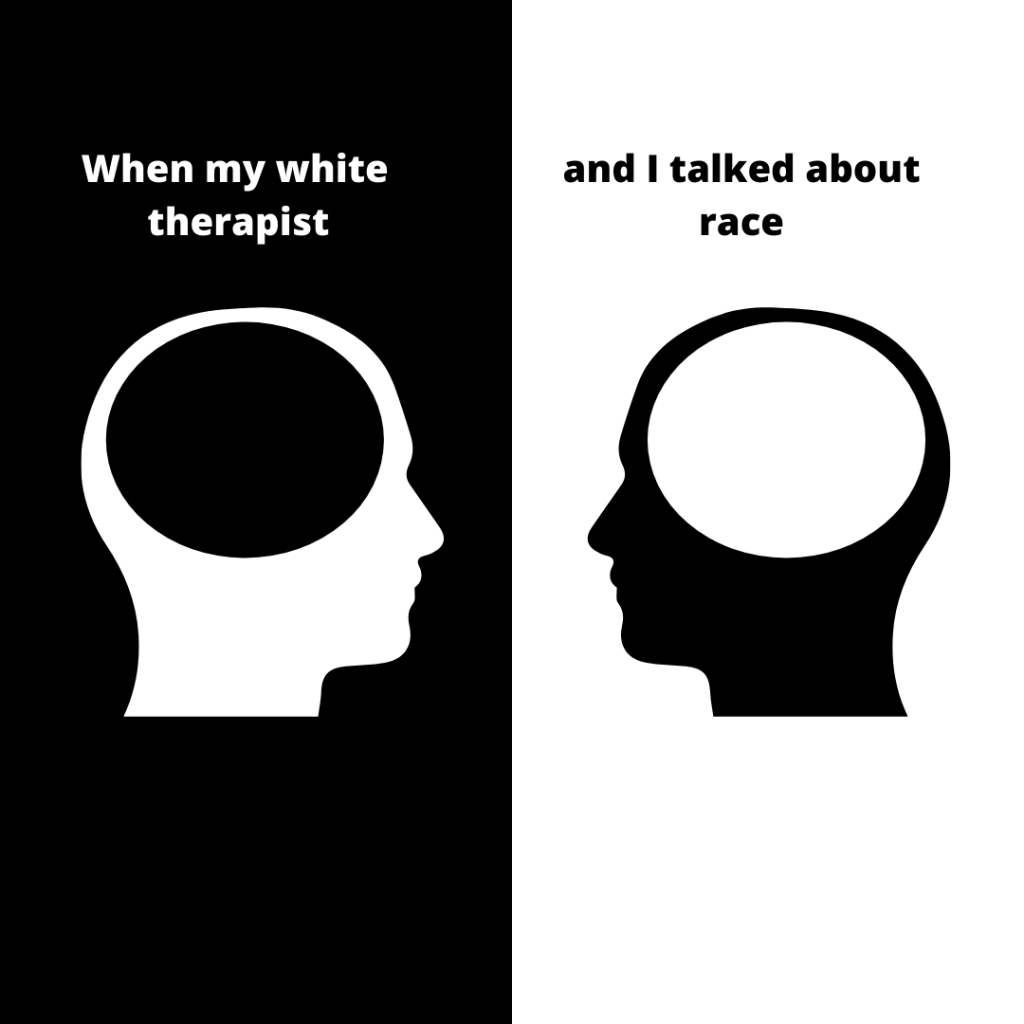
Needless to say, by the time I was ready to have a session with my therapist, I was exhausted. If you know me personally, you’ll know I talk about her from time to time. To my friends who don’t have a therapist, I’ll drop a nugget of her knowledge in conversations as a way to help them if it’s wanted. But one day, a friend asked me, “How can you have a white therapist? Aren’t there some things she just wont understand?” I could see where this friend was coming from. The Black experience is unique to Black people. What would happen if race was a topic during a therapy session? About two weeks after George Floyd’s murder, I found out.
Although I had known my therapist for some time now, I held my breath. I had grown to respect her so much and I was scared she would say something that would destroy it all in an instant. I didn’t want the session to turn into a debate about race. I just wanted help. I prayed that she and I still had the same ideas of right and wrong. In a leap of faith, I told her my fears. I told her how I lost sleep. I told her that I was worried about something that hadn’t happened yet, but viral videos of Black bodies laying in the streets proved it could happen.
She didn’t need much time to come up with a response. It came so naturally, so effortlessly. “I’ll never understand what it’s like, but I understand why you feel scared. You don’t get a break from being Black.” It was words I wish my friend who questioned me could have heard. She didn’t invalidate my experience. She acknowledged it was real and that it was hurtful for me. Like many topics I brought to her before, this one was no different. She continued. “You can’t let what is going on in the world steal your joy.” We have been over my anxiety long enough for me to know I had no argument against that. I couldn’t stop bad things from happening. I could speak out against it. I could do my part in the capacity that made sense to me, but bad things can and will still happen. And worrying about it everyday, living in fear was driving me mad. Furthermore, I was adding guilt into the mix which was preventing me from functioning. I could forget about being any sort of help in the state of the world right now. “Treat yourself with love and kindness, so you can do your best in the world.” Since then, I continued to take mental breaks. I went back to the self care routines we had devised long ago but with more enthusiasm. I found the energy I needed to support my community without losing my mind.
I’m thankful for my therapist. She is a mentor and an ally. I know she’s white. But she knows she’s white too and she knows what comes or doesn’t come with that. I understand why Black people would want to have a Black therapist. They are valued and needed. But if you happen to find a white therapist, I still say meet them at least once. You may learn that they are aware of their privilege and even if they haven’t experienced the world the same way as you, they still want to help you. Mental health is so crucial that I would hate to have someone dismiss seeking help solely based on appearances and assumptions. And the first therapist you find might not even be the right fit. Just keep trying. Find what works for you.
I know that there are things white people just won’t experience or fully understand. But my therapist being white does not make her less qualified to be there for me. What makes her qualified (besides her getting credentials to be a therapist) is that she has empathy. She knows the fight for human rights has been a long one, and it will most likely continue to be so. But to her, it shouldn’t be a lonely fight.
“You alone can’t bear the cross of Black America. You do what you can. It’s not only your job to fight racism. It’s ALL of our jobs.”
 Kayla B(e) Writing